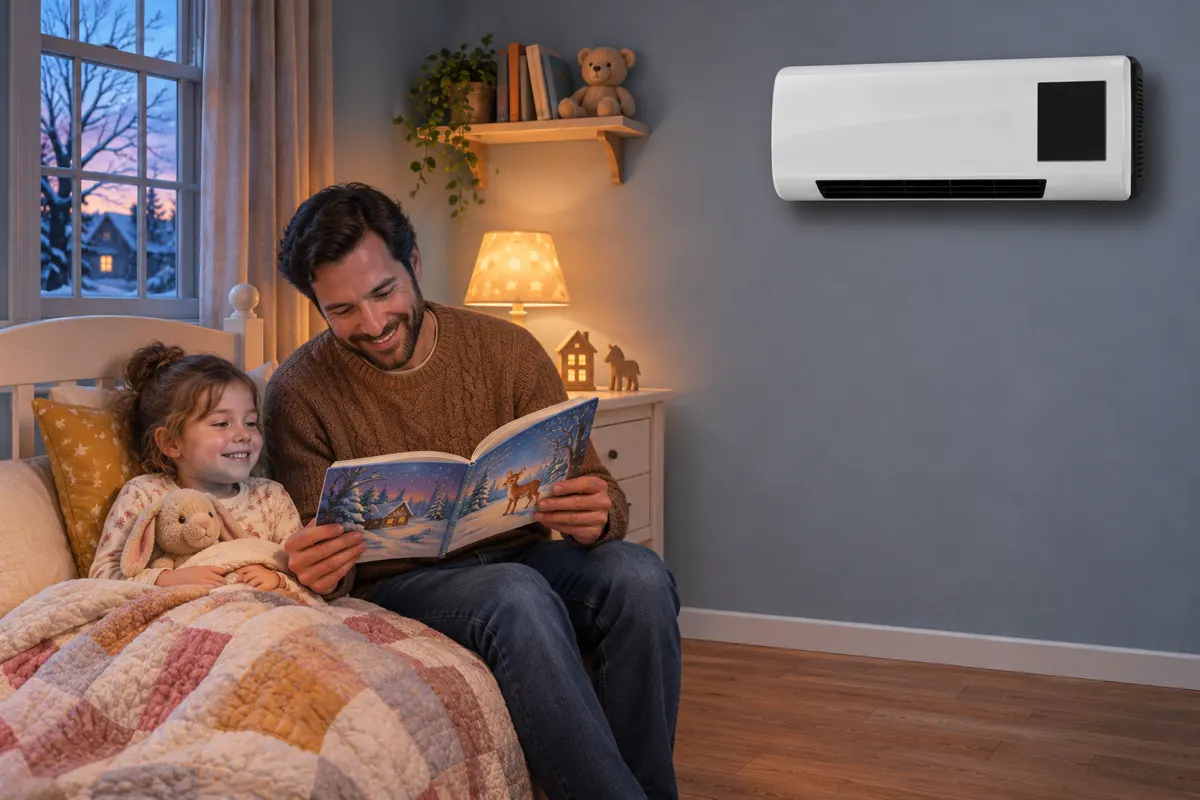
A space heater is one of the most useful things you can own in winter — and one that deserves a few minutes of homework. Fire-safety organizations such as the National Fire Protection Association (NFPA) and the U.S. Consumer Product Safety Commission consistently list heating equipment, and space heaters in particular, among the leading causes of home heating fires. The good news: almost all of that risk comes down to a short list of features and habits. Here is the checklist we use.
The short answer
Choose a heater with a certification mark on its label, overheat protection, a cool-touch housing, a thermostat and auto-off timer, and a placement that can’t be knocked over — a tip-over switch on a floor unit, or a heater mounted up on the wall. Then use it safely: wall outlet only, three feet of clearance, never unattended.
The 10-point safety checklist
- A testing-lab certification markLook on the rating label for the mark of a nationally recognized testing laboratory, such as UL, ETL (Intertek) or CSA. It means the design was tested against a recognized safety standard.
- Overheat protectionAn automatic shut-off if internal temperatures climb too high is the single most important safety feature on a heater you run every evening.
- Tip-over safety — or no floor at allFloor heaters should switch off automatically if knocked over. Even better in a busy home: a heater that mounts up on the wall can’t be knocked over in the first place.
- Cool-touch housingLittle hands and curious noses find heaters. A housing that stays comfortable to the touch removes a burn risk.
- Thermostat and timerA thermostat stops the heater running flat out; an auto-off timer means it won’t run all night if you forget it.
- No exposed glowing elements near kids and petsEnclosed ceramic plates behind a vent are easier to live with than open coils or bare radiant elements at floor level.
- The right size for the roomAn oversized heater runs hot; an undersized one runs constantly. Match the heater to one closed room.
- A sturdy cord and plugCheck the cord and plug before every season. A plug or outlet that feels hot is a stop sign.
- Controls you can reachA remote means nobody climbs over furniture or leans across the heater to adjust it.
- Clear instructionsA manual with clearance distances and mounting guidance. Read it before the first use.
The safe-use routine
- Wall outlet only. Never use an extension cord or power strip, and don’t share the outlet with other high-draw appliances.
- Three feet of clearance. The NFPA recommends keeping anything that can burn at least three feet from heating equipment — bedding, curtains, sofas, laundry, paper.
- Off when you leave or sleep. Warm the room first, then let a timer switch the heater off.
- Away from water. Keep heaters out of wet areas unless the maker specifically rates them for it.
- Out of walkways. A heater and its cord in a walkway get kicked, tripped over and knocked down.
- Smoke alarms. Test them at the start of every heating season (our year-end space heater safety checklist covers the full yearly review).
Why mounting a heater on the wall changes the picture
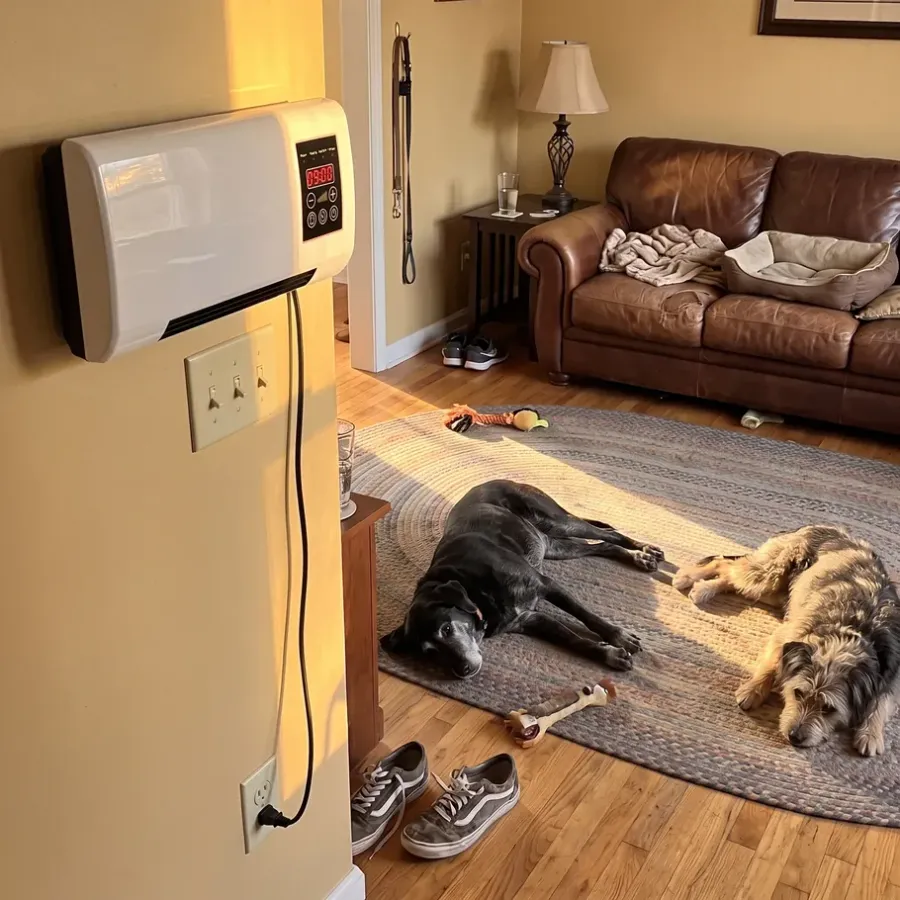
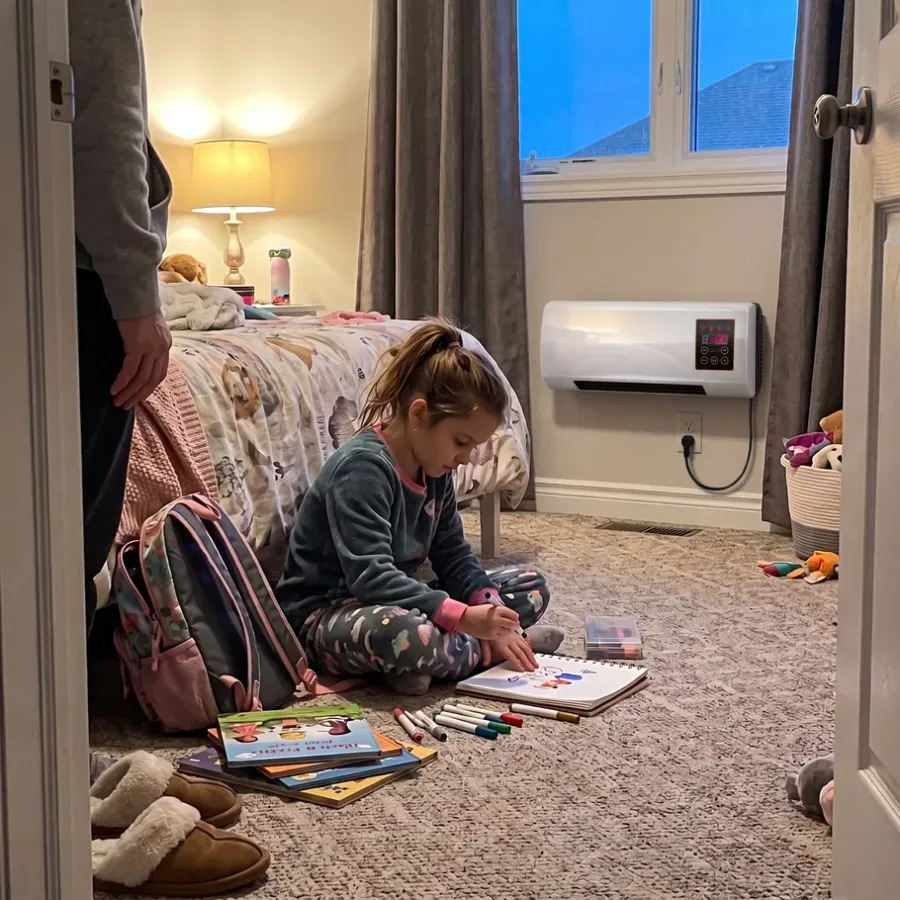
Most space-heater accidents start at floor level: a heater knocked over by a dog, a blanket slipping onto it, a toddler touching it, a cord across the walkway. A heater that hangs on the wall removes most of those scenarios at once. It sits above the reach of kids and pets, its cord runs straight down to the outlet, and nothing in the room can fall on it or push it over. For family homes, that single design choice is often worth more than any extra feature. (We compare every heater format by where it sits in wall-mounted vs. freestanding space heaters.)
Still deciding which kind of heater to buy? Our ceramic vs. oil-filled vs. infrared comparison explains how each type behaves around kids and pets, and what a space heater costs to run covers the bill.
Our recommendation: Power Heat Pro
For a family home, the Power Heat Pro is the heater we recommend, because it is built around the design choice that removes most floor-level risks: it hangs on the wall on its included bracket, up out of reach of kids and pets, with no heater on the floor to knock over and no cord across the walkway. The maker describes a cool-touch exterior, and it has the controls our checklist asks for: an adjustable thermostat, an auto-off timer in 1-hour steps and a remote, so nobody needs to reach over furniture to adjust it. Its heat comes from enclosed PTC ceramic plates behind a vent, not open glowing coils.
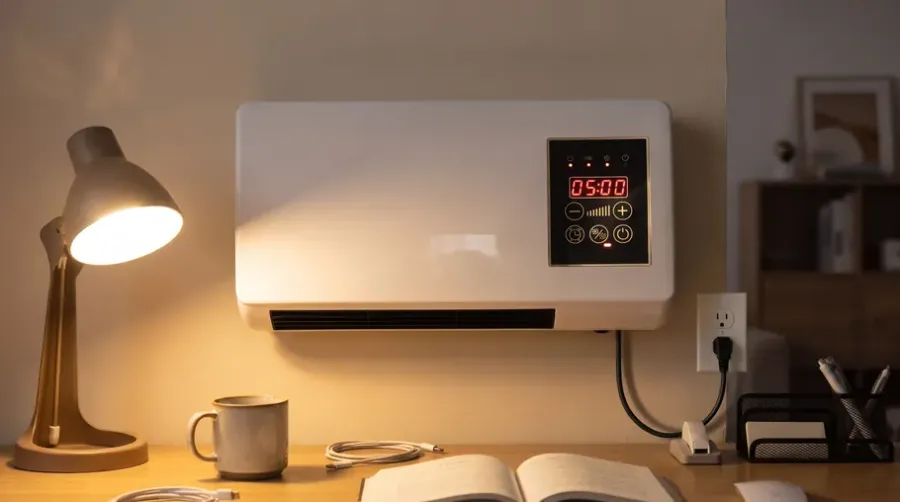
- Off the floor: wall-mounted on the included bracket — nothing to tip, nothing to trip on.
- Cool-touch housing: comfortable if someone brushes against it while it heats.
- Thermostat + timer: holds the temperature you set and switches itself off.
- Remote control: adjust it from the bed or the couch.
On the official checkout (checked November 15, 2026), one Power Heat Pro is $99.99 and the two-pack works out to $79.99 per unit ($159.98). Every order is covered by a 30-day money-back guarantee, and the maker advertises fast shipping. As with any heater, read the manual and check the rating label when it arrives, plug it straight into a wall outlet and keep the clearance the maker recommends (about 50 cm / 20 in from furniture when mounted).
Want every detail first? Read our full Power Heat Pro review — specs, controls, scorecard and verdict.
Frequently asked questions
What is the safest type of space heater?
There is no single safest type, but the safest setups share the same features: a certification mark from a recognized testing lab, protection against overheating, a housing that stays cool to the touch, a thermostat and timer, and a placement that can’t be knocked over — either a tip-over switch on a floor unit or a heater mounted up on the wall. Then it must be plugged directly into a wall outlet with clear space around it.
Can I plug a space heater into an extension cord or power strip?
No. Space heaters draw a lot of current for hours at a time, more than most extension cords and power strips are built for. Plug the heater directly into a wall outlet, and avoid sharing that circuit with other high-draw appliances.
How far should a space heater be from furniture?
Fire-safety groups such as the NFPA recommend keeping anything that can burn — bedding, curtains, furniture, clothes, paper — at least three feet (about one meter) away from heating equipment. Always follow the clearance in your heater’s manual too.
Is it safe to leave a space heater on overnight?
Fire-safety guidance is to turn space heaters off when you leave the room or go to sleep. If you want a warm bedroom at bedtime, warm it up beforehand and use a heater with an auto-off timer so it switches itself off after you fall asleep.