The short answer
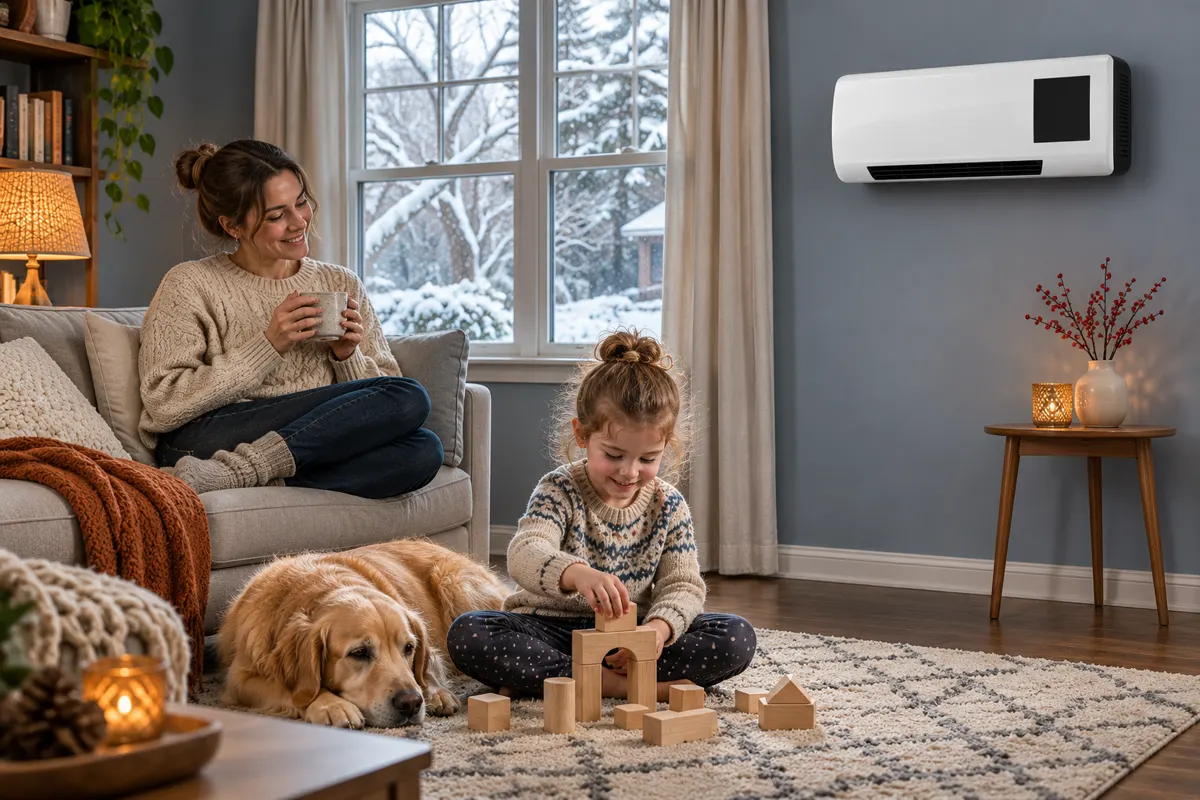
Freestanding heaters (floor, tower and tabletop) are easy to move but take up floor or desk space and can be knocked over. Hardwired wall and baseboard heaters are permanent but usually need an electrician. A plug-in wall-mounted heater sits in between: it hangs on a bracket, plugs into a normal outlet and keeps the floor clear. For bedrooms, offices and homes with kids or pets, a heater that mounts on the wall and can stand on a desk, like the Power Heat Pro, is the most flexible format.
Most space heater guides argue about how a heater makes heat: ceramic, oil, infrared. (We covered that in ceramic vs. oil-filled vs. infrared heaters.) But the question that shapes daily life more is simpler: where does the heater sit? On the floor where the dog sleeps, on the desk next to your papers, or up on the wall out of the way? The format decides how much space you lose, how easy it is to knock over, and how well the warm air spreads.
The six heater formats, by where they sit
1. Floor and tower heaters
The classic portable format: a box or a tall tower that sits on the floor, usually with a fan. Easy to carry from room to room and no setup at all.
Watch out for: it takes floor space, its cord often crosses a walkway, and it can be bumped or tipped by kids, pets or a vacuum. It also needs a clear zone around it, which is hard in a small bedroom.
2. Tabletop and desk heaters
Smaller units that sit on a desk, counter or nightstand. Handy for warming one person at a workstation.
Watch out for: they share the surface with papers, cups and cables, so they need a clear, stable spot away from anything that can burn or spill.
3. Oil-filled radiators
Heavy floor units on wheels that heat silently and keep radiating after they switch off. Pleasant for long, steady heat.
Watch out for: they are bulky, slow to warm a cold room and still occupy floor space.
4. Small plug-in outlet heaters
Compact units that plug straight into the outlet and hang on it. Zero footprint, but low output, so they suit very small spaces rather than a full room.
5. Hardwired wall and baseboard heaters
Permanent heaters wired into the home’s electrical circuit, mounted in the wall or along the baseboard. They look built-in and stay put.
Watch out for: installation usually means an electrician, sometimes a dedicated 240-volt circuit, and they can’t follow you to another room or another home. Renters often can’t install them at all.
6. Plug-in wall-mounted (2-in-1) heaters
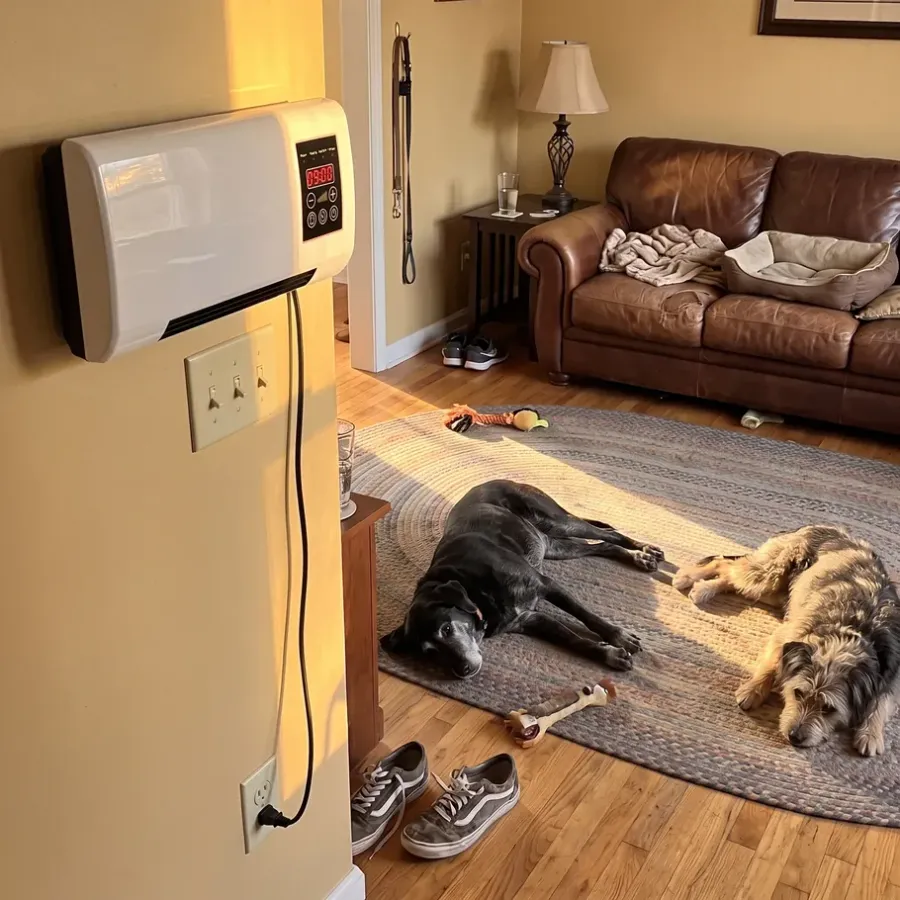
The format that combines the best of both sides: the heater hangs on a bracket on the wall, plugs into a standard household outlet, and on some models can also stand on a desk or counter. The Power Heat Pro works this way: an 1800 W PTC ceramic heater with the bracket included, no installer, no ducts and no outdoor unit.
Side by side
| Format | Floor space | Setup | Easy to knock over? | Moves between rooms? | Best for |
|---|---|---|---|---|---|
| Floor / tower | Yes | None | Yes | Yes | Occasional use, larger rooms |
| Tabletop / desk | Desk space | None | Possible | Yes | One person at a desk |
| Oil-filled radiator | Yes, bulky | None | Less likely, heavy | On wheels | Silent, steady heat |
| Plug-in outlet mini | No | None | No | Yes | Very small spaces |
| Hardwired wall / baseboard | No / along the wall | Electrician | No | No | Permanent heat, owners |
| Plug-in wall-mounted 2-in-1 | No (on the wall) | Bracket + outlet | No, when mounted | Yes, or use on a desk | Bedrooms, offices, kids and pets, renters |
Which format fits your room?
- Small bedroom or nursery: every square foot of floor counts, and little hands explore. A heater mounted up on the wall keeps the floor clear and the unit out of reach.
- Home with a dog or cat: pets lie next to warm things and knock things over. Wall mounting removes the “tail hits the heater” problem.
- Home office: a desk heater warms you but steals desk space; a wall unit next to the desk warms the room and leaves the desk free.
- Renters: hardwired heaters are usually off the table. A bracket-mounted heater that plugs into an outlet goes with you when you move.
- Garage, workshop or basement corner: a heater on the wall stays clear of sawdust, tools and the floor traffic of a work area. Keep it well away from fuel, solvents and anything flammable.
- Several rooms, occasional use: a 2-in-1 heater can live on the wall in the room you use most and stand on a table elsewhere when needed.
Placement rules for any format
- Plug straight into a wall outletFire-safety groups such as the NFPA advise against extension cords and power strips for space heaters. Choose a mounting spot within reach of an outlet so the cord plugs in directly.
- Give it spaceThe NFPA recommends keeping anything that can burn at least three feet from heating equipment. For a mounted Power Heat Pro, the maker recommends about 50 cm (20 in) from furniture; keep curtains and bedding well clear too.
- Mount it on a solid wall, at the height the manual showsUse the included bracket, check that it is level, and keep the air outlet unobstructed so the fan can spread warm air across the room.
- Keep it away from waterNot next to a sink, tub or shower unless the maker says the heater is designed for it.
- Turn it off when nobody is in the roomUse the timer at bedtime and switch it off when you leave. A heater with a thermostat and auto-off timer makes this automatic.
Our recommendation: Power Heat Pro
If you want the format that fits the most rooms and the most households, the Power Heat Pro is the heater we recommend. It is a true 2-in-1: hang it on the wall with the included bracket to keep the floor clear for kids, pets and furniture, or stand it on a desk or counter when you want it somewhere else. It plugs into a standard household outlet, so there is no electrician and no wiring job, and it brings the controls that make any format easier to live with: an adjustable thermostat, Fan, Low Heat and High Heat modes, an auto-off timer in 1-hour steps and a remote control, so a wall-mounted heater is never awkward to adjust.
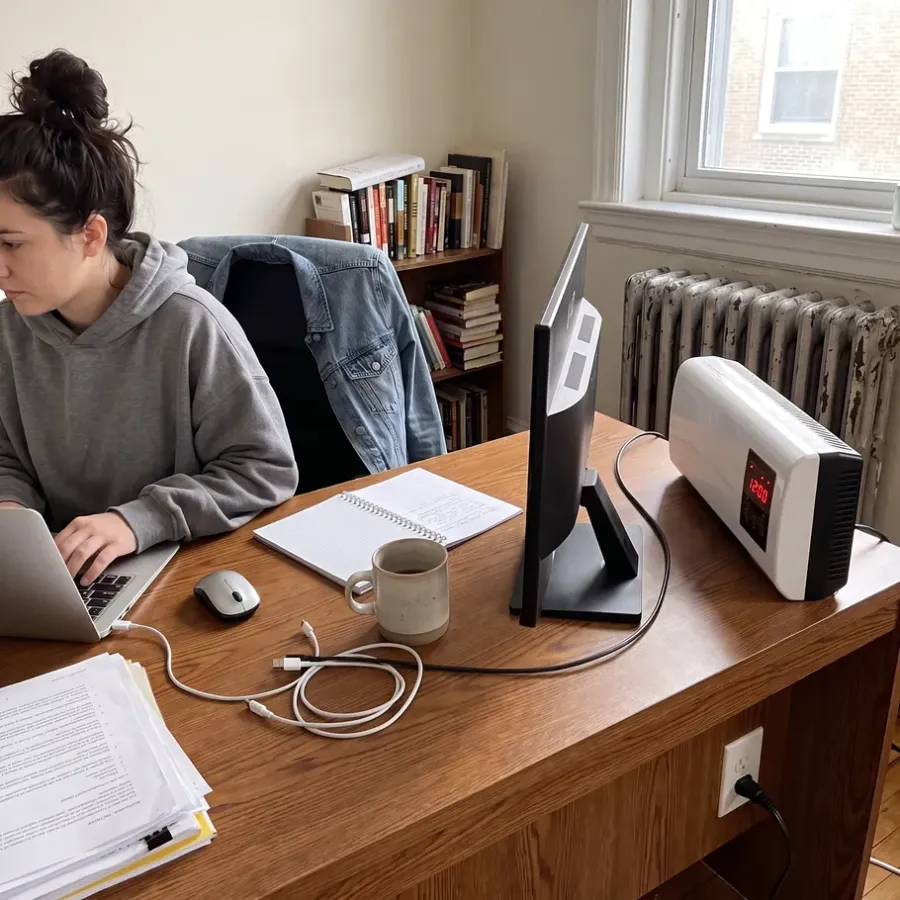
- Wall or desk: bracket included for the wall, or freestanding on a flat surface.
- No installation job: plugs into a standard outlet; no ducts and no outdoor unit.
- Remote + timer: adjust it from the couch or bed and let it switch itself off.
- Cool-touch housing as described by the maker, with PTC ceramic plates and a fan that spreads warm air.
On the official checkout (checked November 15, 2026), one Power Heat Pro is $99.99 and the two-pack works out to $79.99 per unit ($159.98). Every order is covered by a 30-day money-back guarantee, and the maker advertises fast shipping. Mount it where the room needs it most, keep the clearance the maker recommends, and let the thermostat do the rest.
Want every detail first? Read our full Power Heat Pro review — specs, controls, scorecard and verdict.
Frequently asked questions
Is a wall-mounted heater better than a portable space heater?
It depends on the room. A wall-mounted heater keeps the floor clear, is hard to knock over and has no cord across the walkway, which suits homes with kids, pets or little floor space. A portable floor heater is easier to move from room to room. A 2-in-1 heater that hangs on a bracket or stands on a desk gives you both options.
Do wall heaters need an electrician?
Hardwired wall heaters and baseboard heaters are wired into your home’s electrical circuit and usually need an electrician, and sometimes a 240-volt circuit. Plug-in wall-mounted heaters, like the Power Heat Pro, hang on a bracket and plug into a standard household outlet, so there is no wiring job.
Where is the best place to mount a wall heater?
Mount it on a solid wall, near a wall outlet so the cord can plug in directly, away from curtains, beds, sofas and anything that can burn, and out of reach of small children. Follow the clearance the maker gives; for the Power Heat Pro it is about 50 cm (20 in) from furniture when mounted.
Are wall-mounted heaters more energy-efficient?
Not by themselves. Every electric resistance heater turns essentially all of its electricity into heat, wherever it sits. What lowers the bill is heating only the room you use, keeping the door closed, and using a thermostat and timer so the heater runs no longer than needed.
Can I use a space heater in a bathroom?
Only if the maker specifically says the heater is designed for bathrooms. Water and electric heaters don’t mix: keep any heater away from sinks, tubs and showers, and never touch one with wet hands.