The short answer
Once a year, before or early in winter, give your space heater and your home a 30-minute checkup: inspect the cord, plug and outlet, look up recalls on CPSC.gov, dust the vents, confirm the 3-foot clearance, plug it straight into a wall outlet, test every smoke and carbon monoxide alarm, book the furnace inspection and write down warranty dates. Heating is a leading cause of U.S. home fires, and most of the risk comes from a few things you can check in one evening. If your current heater fails the checklist, a modern wall-mounted ceramic heater with a cool-touch housing and an auto-off timer, such as the Power Heat Pro, is the easy replacement.
December is when space heaters work hardest and when most of us think about them least. They come out of the closet, get plugged in wherever the cord reaches and run for hours. The National Fire Protection Association (NFPA) counts heating equipment among the leading causes of U.S. home fires, and its data show space heaters are behind the large majority of home heating fire deaths. The good news: almost every risk factor on that list is something you can check yourself before 2027 arrives. Here is the year-end checkup, in the order we would do it.
Part 1: the heater itself
- ☐ Cord and plug. Run your fingers along the full cord. Any fraying, cracking, flattening or exposed wire means the heater is done. The plug prongs should be straight and clean, with no scorch marks.
- ☐ Housing and controls. Look for cracks, melted spots or discoloration. Buttons, dials, the thermostat and the timer should respond normally.
- ☐ Vents and grilles. Unplug the heater, let it cool and vacuum or wipe the dust from the intake and outlet grilles. Dust on a hot element is the source of that “burning” smell many people notice at the start of the season.
- ☐ Safety label. Check for the mark of a recognized testing laboratory such as UL, ETL or CSA. NFPA recommends buying heaters listed by a qualified testing lab.
- ☐ Recall check. Search the brand and model number on CPSC.gov/Recalls. Older and very cheap heaters are recalled more often than people realize.
- ☐ Remote and timer. Replace the remote battery and confirm the auto-off timer still shuts the heater down on its own.
Part 2: where and how it is plugged in
- ☐ Straight into the wall. NFPA advises plugging space heaters directly into a wall outlet, never into an extension cord or power strip.
- ☐ Outlet temperature. After an hour of use, carefully touch the outlet cover and plug. Warm-to-the-touch is a warning; hot, discolored or loose means call an electrician.
- ☐ One heater per circuit. Do not run a space heater on the same circuit as a microwave, hair dryer or other high-wattage appliance.
- ☐ The 3-foot rule. Keep bedding, curtains, sofas, clothes and paper at least 3 feet away, and keep a 3-foot kid-free and pet-free zone around the heater, as NFPA recommends. A wall-mounted heater keeps this zone much easier to hold.
Part 3: the rest of the house
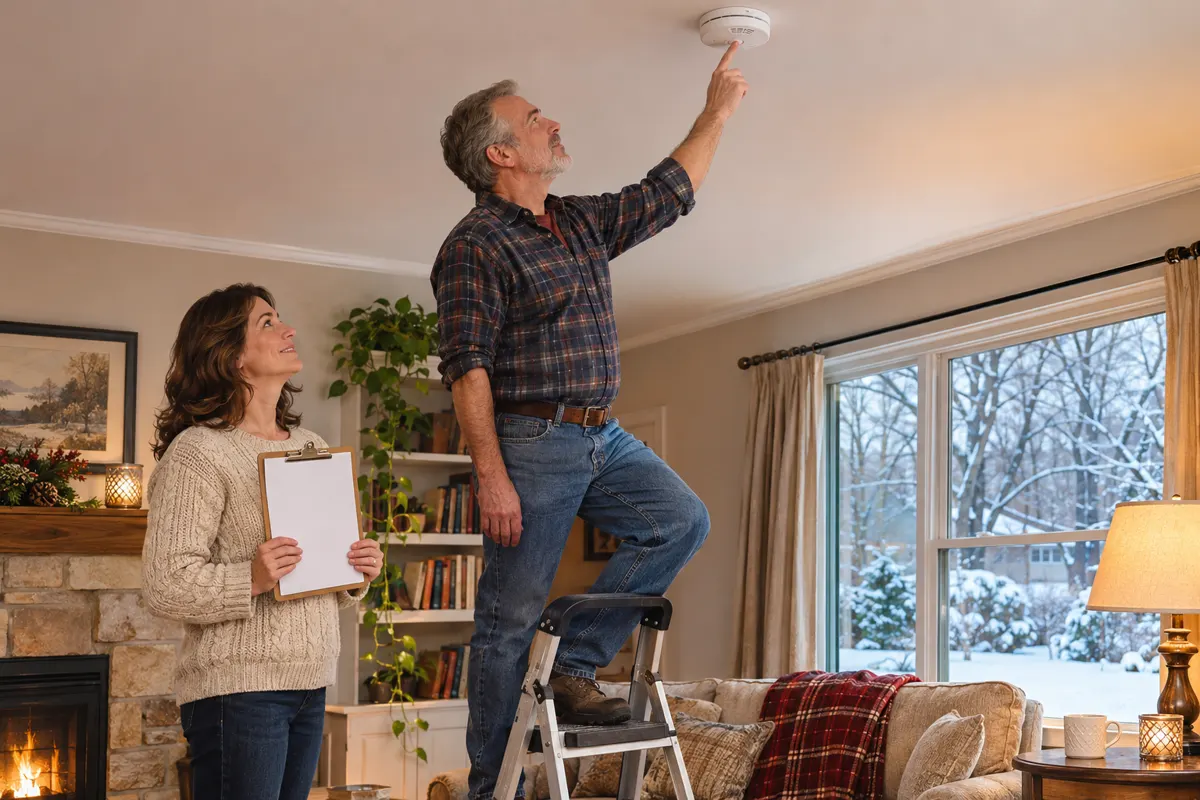
- ☐ Test every smoke alarm. Press the test button on each one. NFPA and the U.S. Fire Administration recommend testing monthly and replacing alarms that are 10 years old (the date is printed on the back).
- ☐ Test the carbon monoxide alarms. Especially important if you have a gas furnace, fireplace, attached garage or fuel-burning heater. Follow the maker’s replacement date.
- ☐ Book the furnace and chimney inspection. NFPA recommends that heating equipment and chimneys be cleaned and inspected every year by a qualified professional.
- ☐ Replace the furnace filter. A clogged filter makes the whole system work harder.
- ☐ Fire extinguisher. Check the gauge is in the green and that everyone knows where it is.
- ☐ Drafts and cold rooms. Note the rooms that never warm up; that is where a room heater earns its place (our guide to measuring room temperature correctly shows how to find them).
Part 4: paperwork that saves money later
- ☐ Warranty and guarantee dates. Write down when each heater, furnace part or appliance warranty ends, so you can claim before it expires.
- ☐ Product registration. Register new appliances with the maker so you hear about recalls.
- ☐ Manuals in one folder. Paper or a phone album with photos of model labels makes the next recall check a two-minute job.
What to check, how often, and who says so
| What to check | How often | Source |
|---|---|---|
| Space heater cord, plug, housing, vents | At the start of each season, then monthly while in use | Manufacturer instructions; NFPA heating safety tips |
| Recalls for every heater you own | Once a year, and when you buy a used one | CPSC.gov recall database |
| Clearance (3 feet) and wall-outlet only | Every time you move the heater | NFPA |
| Smoke alarms | Test monthly; replace at 10 years | NFPA, U.S. Fire Administration |
| Carbon monoxide alarms | Test monthly; replace per manufacturer | Manufacturer instructions |
| Furnace and chimney | Professional inspection every year | NFPA |
| Warranty and guarantee dates | Once a year, in December | Your receipts |
When to replace instead of repair
Do not repair a damaged cord, a melted plug or a cracked housing with tape. Replace the heater if it fails any item in Part 1, if it is on a recall list, if it has no testing-lab mark, or if it is an old coil heater that sits on the floor next to bedding or curtains. A space heater is an inexpensive appliance; a fire is not. When you shop, use our 10-point guide to choosing a safe space heater, and if you are deciding where it should go, compare wall-mounted vs. freestanding heaters.
Our recommendation: Power Heat Pro
If your old heater failed the checkup, or you simply want the checklist to be easier next December, the Power Heat Pro is the heater we recommend. It is built around the habits on this list: it hangs on the wall on its included bracket, up off the floor and away from bedding, rugs, kids and pets, which makes the 3-foot rule simple to keep. The maker describes a cool-touch exterior, and the auto-off timer shuts it down on its own when you go to bed or leave. An adjustable thermostat holds the temperature you set instead of running flat out, and the remote means nobody has to reach over the heater to change it.
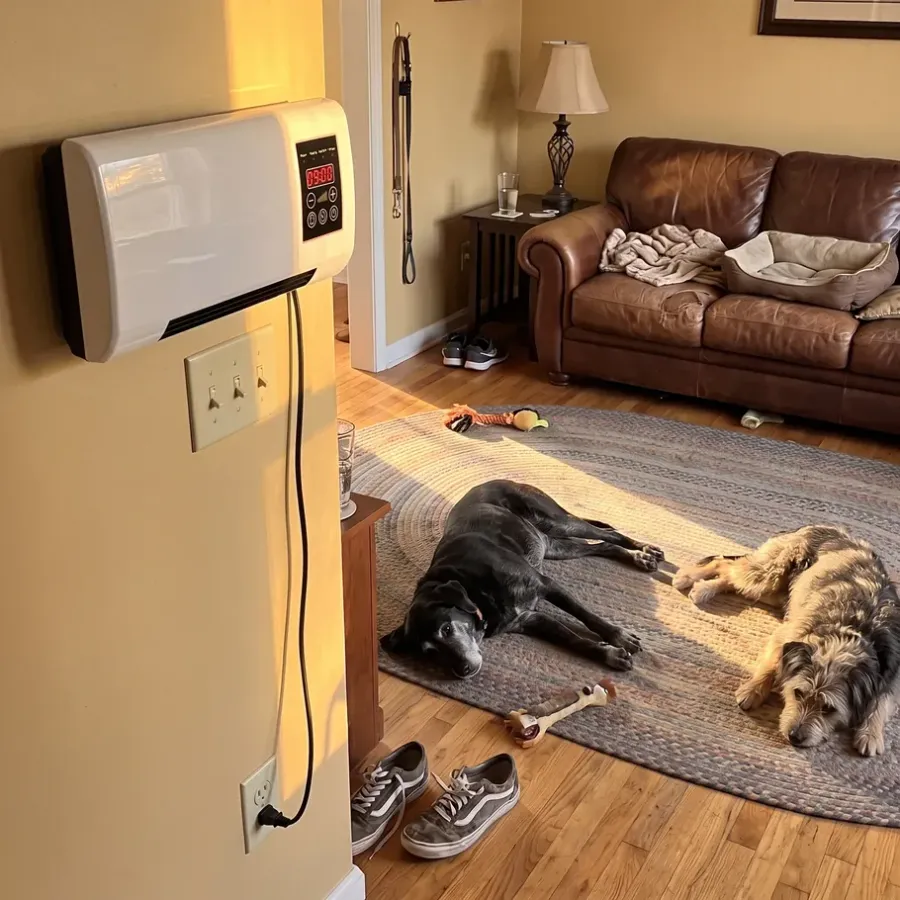
- Wall-mounted: off the floor, out of reach and away from fabrics; also works on a desk.
- Cool-touch housing: comfortable if someone brushes against it, according to the maker.
- Auto-off timer: one less thing to remember at bedtime.
- Thermostat + remote: steady warmth you can adjust from across the room.
On the official checkout (checked November 15, 2026), one Power Heat Pro is $99.99 and the two-pack works out to $79.99 per unit ($159.98). Every order is covered by a 30-day money-back guarantee, and the maker advertises fast shipping. Plug it straight into a wall outlet, keep the area clear, and next year’s checkup takes five minutes.
Want every detail first? Read our full Power Heat Pro review — specs, controls, scorecard and verdict.
Sources: National Fire Protection Association (NFPA), heating safety tips and home heating fire research (3-foot clearance, wall outlet only, testing-lab listing, annual professional inspection); U.S. Consumer Product Safety Commission recall database (cpsc.gov/Recalls); U.S. Fire Administration, smoke alarm guidance (test monthly, replace at 10 years). Checked November 19, 2026. General safety information; always follow your heater’s manual.
Frequently asked questions
How often should I check my space heater for safety?
Give it a quick look every time you take it out for the season and a short check each month of use: cord, plug, housing and vents. Once a year, before or early in winter, do a full checkup that includes recall lookups, cleaning and testing the smoke and carbon monoxide alarms in your home.
What are the signs a space heater is unsafe to use?
A frayed or cracked cord, a plug or outlet that gets hot or discolored, a burning smell that does not fade after the first use, scorch marks on the housing, damaged controls or a heater that has been recalled. Stop using it and replace it if you see any of these.
Can I plug a space heater into an extension cord or power strip?
No. The National Fire Protection Association advises plugging space heaters directly into a wall outlet, never into an extension cord or power strip, because a heater draws a lot of current for hours.
How far should a space heater be from furniture and curtains?
Keep anything that can burn, such as bedding, curtains, furniture, clothing and paper, at least 3 feet (1 meter) away from a space heater, and keep a 3-foot kid-free and pet-free zone around it, as NFPA recommends.
How do I check if my space heater has been recalled?
Search the brand and model on the U.S. Consumer Product Safety Commission recall site, CPSC.gov, or on SaferProducts.gov, and register new appliances with the maker so you are contacted if a recall is issued.
How often should smoke alarms be tested and replaced?
Test smoke alarms at least once a month by pressing the test button, and replace the whole alarm when it is 10 years old, according to NFPA and the U.S. Fire Administration. Follow the manufacturer’s instructions for carbon monoxide alarms.