
Walk down any heater aisle and you’ll see three families of electric heaters doing the same job in very different ways: compact ceramic fan heaters, heavy oil-filled radiators, and glowing infrared units. They all turn electricity into heat at the same efficiency, so the right choice is not about the bill per watt — it’s about how each one delivers heat, how fast, how quietly and where it lives in your room. Here is how they really compare.
The short answer
Ceramic heaters warm the air fast with a fan and are compact — the best all-round choice for a bedroom, office or living room you use for a few hours at a time. Oil-filled radiators are silent and hold heat, but they’re heavy and slow to warm up. Infrared heaters warm people and objects in front of them instantly — great for one spot or a drafty space, less good at warming a whole room evenly. Per watt, all three cost the same to run.
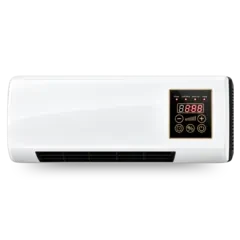
How each type makes heat
Ceramic heaters (PTC + fan)
Electricity heats ceramic plates; a fan blows room air across them and pushes warm air out. Modern units use PTC (positive temperature coefficient) ceramic, whose resistance rises as it heats up, so the plates are naturally self-limiting. Result: warm air within seconds of switching on, spread across the room by the fan. Ceramic heaters are compact and light, which is why the best ones can hang on a wall or sit on a desk.
Oil-filled radiators
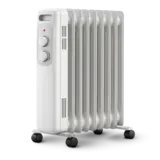
An electric element heats a sealed reservoir of oil inside metal fins; the fins radiate heat and warm the air around them by natural convection. There is no fan, so they are silent, and the oil keeps radiating for a while after the element cycles off. The trade-off: they are heavy, they take a long time to warm a cold room, and the fins get hot at floor level.
Infrared (radiant) heaters
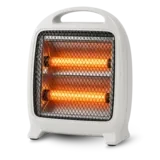
Quartz, carbon or coil elements emit infrared radiation that warms whatever it hits — you, your desk chair, the floor — rather than the air. You feel it instantly, the way you feel the sun, and drafts don’t blow it away. But the warmth is directional: step out of the beam and the room around you can still be cold, and the elements glow hot.
Side-by-side comparison
| Ceramic (fan) | Oil-filled | Infrared | |
|---|---|---|---|
| Warms | The room’s air | The room’s air, slowly | People & objects in front |
| Warm-up | Seconds to minutes | Slow | Instant (in the beam) |
| Noise | Quiet fan | Silent | Silent or quiet |
| Weight & size | Light, compact | Heavy, bulky | Varies |
| Placement | Wall, desk or floor | Floor only | Floor or wall |
| Hot surfaces | Some models cool-touch | Hot fins | Glowing elements |
| Best for | Bedrooms, offices, living rooms | Rooms heated all day | One spot, drafty spaces |
Running cost depends on wattage and hours, not on heater type. See what a space heater costs to run for the math.
Which type wins, room by room
- Bedroom: ceramic. Warm the room quickly before bed, then let a thermostat and timer take over. A wall-mounted unit keeps hot surfaces away from bedding.
- Home office: ceramic, wall-mounted or on the desk, so your hands and the whole room are warm without a heater under your feet. Infrared is a decent second choice for one desk in a big, drafty room.
- Living room: ceramic for evenings; oil-filled if the room is occupied all day and silence matters more than speed.
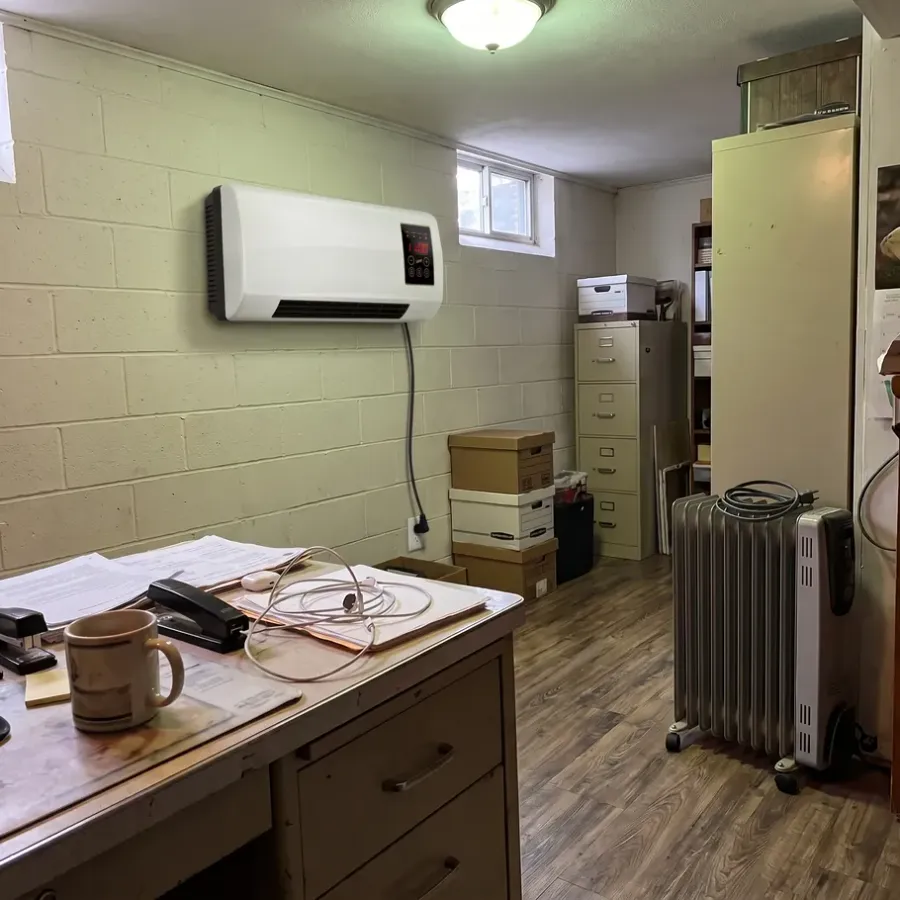
- Basement or guest room: ceramic — these rooms are used occasionally, so fast warm-up matters more than heat retention.
- Garage or workshop: infrared for spot heat where you stand, or a wall-mounted ceramic unit for a small, closed workshop. Keep any heater away from sawdust, fuel and solvents.
What to look for in any type
- A real thermostat so the heater cycles instead of running flat out.
- A timer so it switches itself off.
- Safety basics: a testing-lab certification mark on the label, protection against overheating, and either a tip-over switch or a placement that can’t be knocked over. Our guide to choosing a safe space heater has the full checklist.
- Controls you’ll actually use: a remote makes a big difference for a heater on the wall or across the room.
Our recommendation: Power Heat Pro
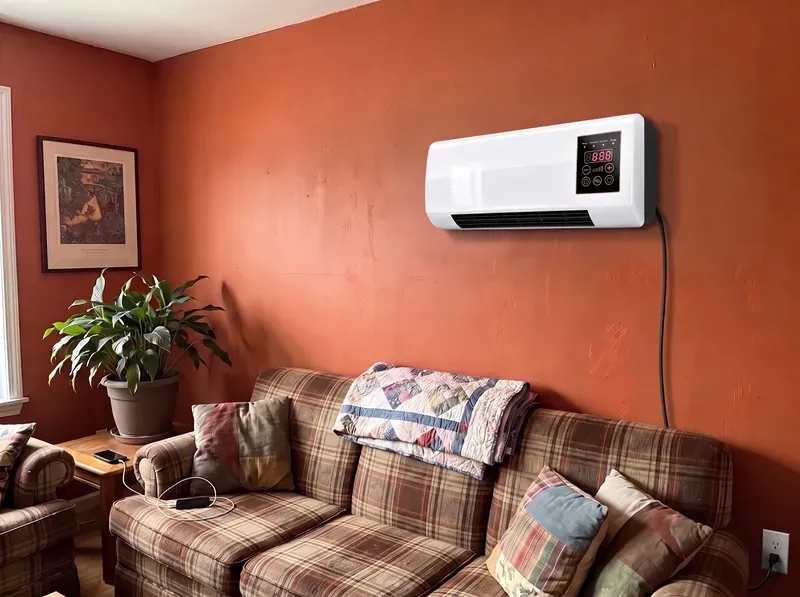
For most bedrooms, offices and living rooms, ceramic is the type that fits — and the Power Heat Pro is the ceramic heater we recommend. It takes the strengths of the category and removes the usual floor-heater compromises: 1800 W PTC ceramic plates that heat up as soon as you switch on, a quiet fan that spreads the warmth wall to wall, and a slim body that hangs on the wall on its included bracket or stands on a desk. Compared with an oil-filled radiator it warms a cold room far sooner; compared with an infrared spot heater it warms the whole room, not just the beam.
- Fast ceramic heat: PTC plates respond in seconds; no waiting for oil to warm up.
- Even, room-wide warmth: fan-forced air reaches the corners, not just one spot.
- Off the floor: wall-mounted with a cool-touch exterior, unlike hot radiator fins at floor level.
- Real controls: Fan / Low / High modes, thermostat, auto-off timer and a remote.
On the official checkout (checked November 15, 2026), one Power Heat Pro is $99.99 and the two-pack works out to $79.99 per unit ($159.98). Every order is covered by a 30-day money-back guarantee, and the maker advertises fast shipping. It’s the easiest way to get the benefits of ceramic heat in the room you use most.
Want every detail first? Read our full Power Heat Pro review — specs, controls, scorecard and verdict.
Frequently asked questions
Which is better, a ceramic or an oil-filled heater?
It depends on the room. A ceramic heater with a fan warms a room in minutes, is compact and light, and is easy to mount or move. An oil-filled radiator is silent and keeps radiating heat after it switches off, but it is heavy and slow to warm up. For rooms you use for a few hours at a time — a bedroom, office or den — ceramic is usually the better fit.
Are infrared heaters better than ceramic heaters?
Infrared heaters warm the people and objects directly in front of them rather than the air, so they feel warm instantly and work well in drafty spaces or for one spot like a desk. Ceramic fan heaters warm the air and spread it through a closed room. To warm a whole room evenly, ceramic usually wins; to warm one person in a draft, infrared can be better.
Which type of space heater is cheapest to run?
Per watt, they all cost the same: electric resistance heaters turn essentially all their electricity into heat. The cheapest heater to run is the one that draws only what the room needs, has a thermostat and timer, and lets you keep the central heating lower.
What is a PTC ceramic heater?
PTC stands for positive temperature coefficient. PTC ceramic plates heat up quickly when powered, and their electrical resistance rises as they get hot, which makes them naturally self-limiting. Paired with a fan, they deliver fast, even warm air.