The short answer
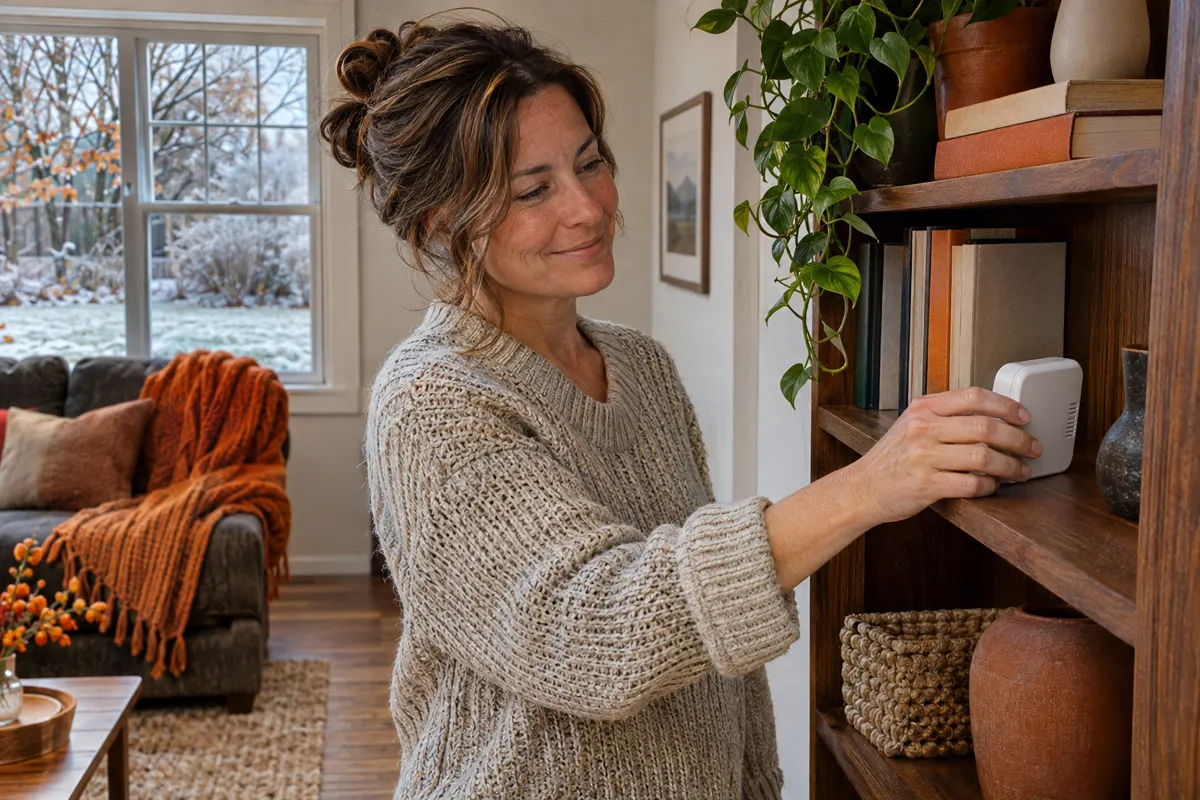
To measure room temperature correctly, place a digital thermometer on an inside wall or shelf at about chest height, away from windows, doors, sunlight, electronics and heaters, wait 15 to 30 minutes, and read it at the same times each day where you actually sit. Check a few spots to find cold corners, and add a hygrometer for humidity (30–50% is ideal). Once you know the real number in the room you use, a room heater with a thermostat, such as the Power Heat Pro, can hold that temperature for you.
“It says 68 but it feels like 60” is one of the most common winter complaints, and usually both numbers are honest. The thermostat in the hallway measures the hallway. Your sofa by the window lives in a different climate. Before you buy anything or turn anything up, it pays to measure the room properly. It takes a $10 to $20 thermometer, a few minutes and the right technique, which is what this guide covers.
What you need
- A digital thermometer-hygrometer. Shows temperature and relative humidity together. Two are better than one if you want to compare rooms.
- A strip of tissue paper or a light ribbon. For finding drafts.
- A plug-in energy meter (optional). Measures what a heater actually uses in kilowatt-hours. Choose one rated for the heater’s wattage.
- A notebook or your phone. A few readings written down beat a dozen remembered ones.
Step by step: measuring the air temperature
- Pick the spotAn inside wall or shelf at about chest height (roughly 4 to 5 feet up), where you would mount a thermostat. The U.S. Department of Energy advises placing thermostats on an interior wall away from direct sunlight, drafts, doorways, skylights and windows, and the same rule works for any thermometer.
- Keep it clear of heat and cold sourcesNot on top of a TV, lamp, router or fridge, not above a heater or vent and not on a cold outside wall or windowsill.
- Let it settleWait 15 to 30 minutes after placing it, longer if it came from a warm car or a cold garage.
- Read it where you liveThen take a second reading at the height of your head when seated on the sofa or in bed. That is the number your body feels.
- Read at the same timesFor example at 7 a.m., 6 p.m. and 10 p.m. for three days. Patterns matter more than one reading.
- Write it downTime, temperature, humidity and what was happening (heat on or off, door open or closed, sunny or cloudy).
Common measuring mistakes (and the fix)
| Mistake | What it does to the reading | The fix |
|---|---|---|
| Thermometer on a windowsill | Reads too low at night, too high in sun | Move it to an inside wall |
| On top of a TV, lamp or router | Reads too high | Keep it away from electronics |
| Near the heater or a vent | Reads the heater, not the room | Measure across the room from the heat source |
| On the floor | Reads low: warm air rises, floors are the coldest layer | Chest height, plus one seated-head reading |
| Reading right after moving it | Shows the old location | Wait 15–30 minutes |
| Trusting only the thermostat | Measures the hallway, not your room | Put a thermometer where you sit |
| Using an infrared “gun” thermometer | Reads the surface it points at (wall, floor), not the air | Use an air thermometer for room temperature; keep the IR gun for finding cold walls and windows |
| One reading, one time | Misses evening drops and morning lows | Same times, several days |
Find the cold spots and drafts
Once you have a baseline, walk the room with the thermometer and take readings near the window, the outside wall, the floor by the sofa and the doorway, waiting a few minutes at each spot. A difference of several degrees between the middle of the room and the window corner tells you where heat is escaping. For drafts, hold a strip of tissue paper near window frames, outlets on outside walls and the bottom of doors on a windy day: if it flutters, air is moving. A rolled towel, draft stoppers or heavy curtains often fix the worst spots for very little money.
Check humidity too
Air temperature is only part of comfort. Dry winter air can feel colder and irritate the nose and throat, while very damp air encourages condensation and mold. The U.S. EPA suggests keeping indoor relative humidity below 60%, ideally between 30% and 50%. A thermometer-hygrometer shows both, so you get two answers from one gadget.
Measure what heating actually costs
If you use a room heater, a plug-in energy meter turns guesswork into a real number. Plug it into the wall, plug the heater into it, use the heater normally for a day or a week, then read the kilowatt-hours. Multiply by the rate on your electric bill and you have the true cost of keeping that room warm. A heater with a thermostat cycles on and off once the room reaches the set temperature, so the real figure is usually lower than “watts × hours.” Our guide to what a space heater costs to run shows the math and the typical numbers.
How often to measure
| What | When | Why |
|---|---|---|
| Room temperature | Same 2–3 times a day, for 3 days | Gives you the real pattern, then once a week is enough |
| Cold-spot walk | Once at the start of winter, once on the coldest night | Shows where to block drafts or aim heat |
| Humidity | Glance with each temperature reading | Spot dry air or condensation early |
| Heater energy use | One normal week | Your true cost per night and month |
What should the number be? The World Health Organization recommends at least 18 °C (about 64 °F) indoors in the cold season, and warmer for older adults, young children and people with health conditions. If the room you use sits below that in the evening, you have found the problem to fix. If being cold at home is also getting to you, our article on how a cold house affects your mood covers that side.
Our recommendation: Power Heat Pro
Measuring tells you what your room needs; a thermostat-controlled heater is how you deliver it every evening without fiddling. The Power Heat Pro is the heater we recommend for exactly this: its adjustable thermostat holds the temperature you choose, so the room stops swinging between too cold and too warm. The 1800 W PTC ceramic element and fan bring one room up to temperature quickly, the auto-off timer shuts it down when you go to bed or leave, and the remote control lets you adjust it from where you sit. It hangs on the wall with the included bracket, or stands on a desk.
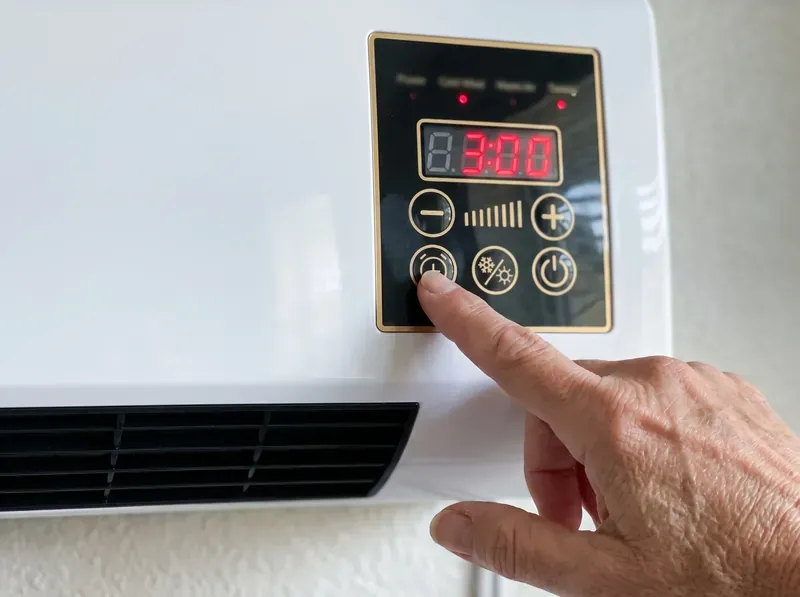
- Set the number you measured: the thermostat keeps the room there instead of running flat out.
- Timer: warm the room before you arrive and switch off on its own.
- Remote control: fine-tune it from the sofa or bed.
- Wall or desk: bracket included; plugs into a standard household outlet, no installer needed.
On the official checkout (checked November 15, 2026), one Power Heat Pro is $99.99 and the two-pack works out to $79.99 per unit ($159.98). Every order is covered by a 30-day money-back guarantee, and the maker advertises fast shipping. Measure the room you use, set the thermostat once and let it hold a comfortable temperature every evening.
Want every detail first? Read our full Power Heat Pro review — specs, controls, scorecard and verdict.
Sources: U.S. Department of Energy, Energy Saver guidance on thermostat placement (energy.gov); U.S. EPA, A Brief Guide to Mold, Moisture and Your Home (indoor relative humidity below 60%, ideally 30–50%); World Health Organization, Housing and Health Guidelines (2018, at least 18 °C indoors in the cold season). Checked November 19, 2026.
Frequently asked questions
Where should I put a thermometer to measure room temperature?
On an inside wall or shelf at about chest height (roughly 4 to 5 feet up), away from windows, outside doors, direct sunlight, lamps, electronics and heaters. That is close to where most people breathe and feel the air, and it avoids the hot and cold spots that throw readings off.
How long does a thermometer take to show the real room temperature?
Give it 15 to 30 minutes after you move it, and longer if it came from a much warmer or colder place. Small digital thermometers react quickly to the air around them but still need time to settle.
Why does my thermostat say one thing and the room feels colder?
The thermostat measures the air where it is mounted, often a hallway or an inside wall, while the room you sit in may lose heat through windows, floors and drafts. Cold surfaces and moving air also make a room feel colder than the air temperature alone suggests.
What is a comfortable room temperature in winter?
The World Health Organization recommends at least 18 °C (about 64 °F) indoors in the cold season for the general population, and warmer for older adults, young children and people with health conditions. Many people set living spaces a little higher for comfort.
What indoor humidity should I aim for in winter?
The U.S. EPA suggests keeping indoor relative humidity below 60%, ideally between 30% and 50%. A cheap digital thermometer-hygrometer shows both temperature and humidity on one screen.
How can I measure how much electricity my space heater uses?
Plug the heater into a plug-in energy meter rated for its wattage, run it as you normally would for a day or a week, then read the kilowatt-hours. Multiply by your electricity rate to get the real cost.