The short answer
Yes, a cold house can weigh on your mood. Being cold for hours makes many people tense, tired and short-tempered, it can make sleep and focus harder, and worry about the heating bill adds stress on top. A large UK study found that adults who started living in a home that was not suitably warm had nearly double the odds of severe mental distress. The good news: you do not have to heat the whole house to feel better. Warming the one room you live in, with the habits below and an efficient room heater like the Power Heat Pro, takes a real weight off.
Most heating advice is about numbers: watts, degrees, cents per kilowatt-hour. (We have done that math in what a space heater costs to run.) But ask people what a cold house is actually like and they talk about feelings: snapping at the kids, dreading getting out of bed, sitting in a coat at the kitchen table, checking the thermostat and feeling guilty. This guide is about that side of the problem, what being cold at home does to your mood and patience, and practical ways to feel warmer and calmer this winter.
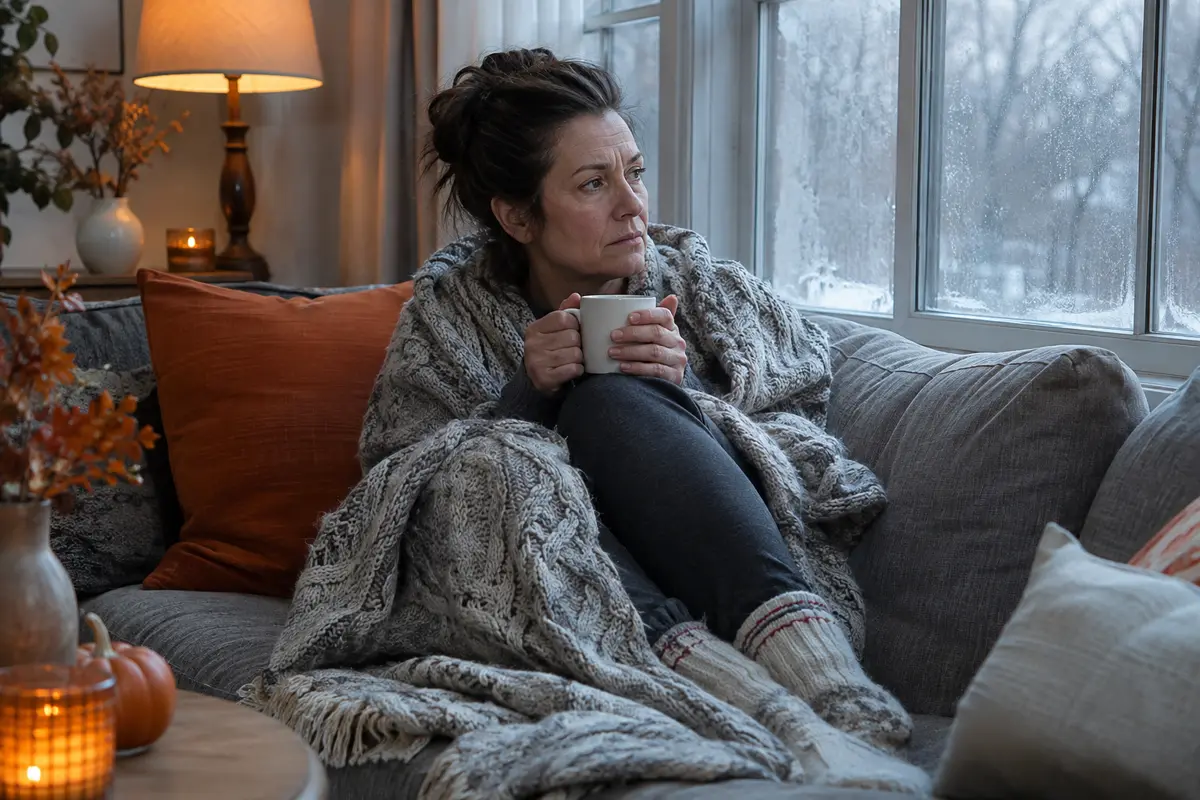
What being cold at home feels like
- Tension in the body. Shoulders up, hands balled in sleeves, jaw tight. Your body is working to keep its core warm, and it is hard to relax.
- Shorter patience. Small things irritate faster when you are uncomfortable. Many people notice they argue more in a cold house.
- Tired but restless. Cold feet and a chilly bedroom can make it harder to fall asleep, and a cold room makes the morning harder still.
- Harder to focus. Reading, working from home or helping with homework is tougher when your fingers are cold.
- Feeling stuck at home. You stay on the sofa under a blanket instead of doing the things you enjoy.
- Money guilt. Turning the heat up feels like spending money you should save; leaving it down feels miserable. Either way you lose.
If several of these sound familiar, you are not being dramatic. Comfort at home is a basic need, and losing it affects people in very ordinary, very real ways.
What the research says
The strongest evidence comes from a long-running UK survey. In a study published in Social Science & Medicine in 2022, researchers Amy Clair and Emma Baker followed adults in the UK Household Longitudinal Study (Understanding Society) between 2009 and 2021. They found that moving into a home that was not suitably warm was linked to nearly double the odds of severe mental distress for people who had no distress at the start, and more than three times the odds for people who were already close to that line. The authors point to the stress of heating costs and the loss of control and comfort at home as likely reasons. It is a study of association in one country, but it matches what many people feel.
There is also an official comfort floor. The World Health Organization’s housing and health guidelines recommend at least 18 °C (about 64 °F) indoors in the cold season, and warmer for older adults, young children and people with health conditions. If the rooms you live in sit below that for hours, feeling worn down is not surprising.
Why the heating bill makes it worse
Cold has a second layer: worry. When every degree feels like money, you spend the evening negotiating with yourself, and that background stress is tiring on its own. The trap is heating the whole house when you only use one or two rooms, which makes the bill bigger and the guilt worse. Heating the room you are in, for the hours you are there, breaks that cycle. If paying for heat is a real struggle, the federal Low Income Home Energy Assistance Program (LIHEAP) helps eligible households with heating bills; your state or local energy assistance office can tell you how to apply.
Practical ways to feel warmer and calmer
- Pick your warm roomChoose the room where you spend your evenings and make it the comfortable one. Close the door so the heat stays where you are.
- Stop the draftsA rolled towel at the bottom of the door, heavy curtains at night and a rug on a cold floor make a room feel warmer without changing the thermostat.
- Warm from the insideWarm drinks, a hot meal and moving around for a few minutes every hour all help. Sitting still for hours is when cold sinks in.
- Layer smartWarm socks and slippers, a thin wool or fleece layer and a blanket on your lap keep your hands and feet comfortable.
- Protect your sleepA comfortable bedroom (not cold), warm bedding and warm feet at bedtime make it easier to fall asleep. A heater on a timer can take the chill off before bed and switch itself off.
- Decide your rule onceSet a simple rule, such as “the living room is warm from 6 to 10 p.m.,” so you stop debating it every night. Fewer small decisions means less stress.
- Get outside lightA short walk in daylight helps mood in the darker months, and coming back to a warm room feels even better.
One caution: if low mood, loss of interest or sleep changes last for two weeks or more, return every winter or make daily life hard, talk to a doctor or mental health professional. The U.S. National Institute of Mental Health has a clear overview of seasonal affective disorder. If you ever have thoughts of harming yourself, call or text 988 at any hour.
Where a room heater fits
The single most effective step on that list is the first one: a truly warm room you can count on. That is exactly what a room heater is for. It brings one space up to a comfortable temperature quickly, so you can heat the room you are in instead of the whole house, and with a thermostat and timer it stops when it should, which also stops the “did I leave it on?” worry. For setup and placement in family homes, see how to choose a safe space heater.
Our recommendation: Power Heat Pro
If a cold room is wearing you down, the Power Heat Pro is the heater we recommend to take that weight off your shoulders. It is built for exactly this job: warming the room you actually live in, quickly, without heating the whole house. The 1800 W PTC ceramic element and fan spread warm air through the room, the adjustable thermostat holds the temperature you choose, the auto-off timer switches it off after you fall asleep or leave, and the remote control means you adjust it from the sofa or bed. It hangs on the wall with the included bracket, keeping the floor clear, or stands on a desk.
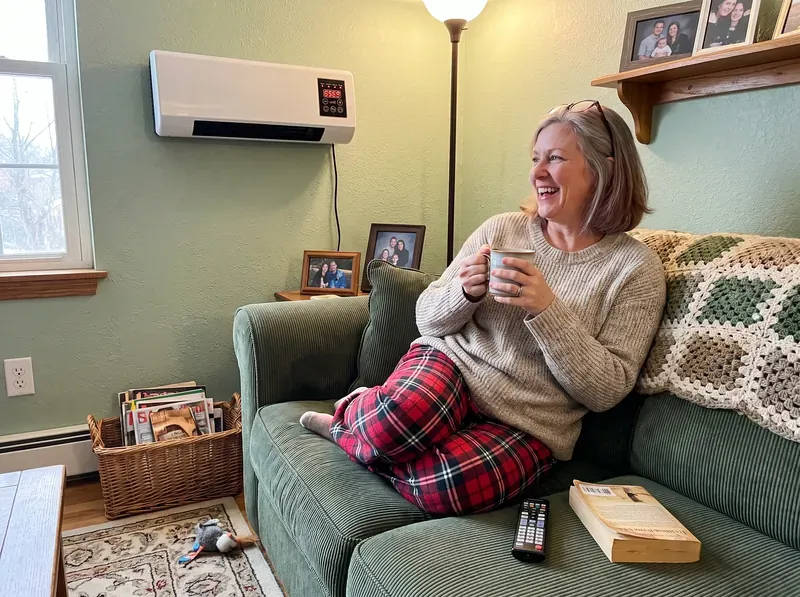
- Warm the room you use: one comfortable room instead of a costly whole-house thermostat battle.
- Thermostat + timer: set your evening rule once and stop thinking about it.
- Remote control: adjust it without leaving the blanket.
- Wall or desk: bracket included; plugs into a standard household outlet, no installer needed.
On the official checkout (checked November 15, 2026), one Power Heat Pro is $99.99 and the two-pack works out to $79.99 per unit ($159.98). Every order is covered by a 30-day money-back guarantee, and the maker advertises fast shipping. Pick your warm room, set the thermostat and timer, and enjoy evenings that feel calm again.
Want every detail first? Read our full Power Heat Pro review — specs, controls, scorecard and verdict.
Frequently asked questions
Can a cold house affect your mood?
Yes. Feeling cold for long stretches makes many people tense, tired and short-tempered, and a large UK study (Clair and Baker, Social Science & Medicine, 2022) found that adults who moved into a home that was not suitably warm had nearly double the odds of severe mental distress, even when they had no distress before. Worry about heating costs and feeling less in control at home are part of the reason.
What indoor temperature is too cold?
The World Health Organization’s housing and health guidelines recommend at least 18 °C (about 64 °F) indoors during the cold season for the general population, and warmer for older adults, young children and people with health conditions.
Why does being cold make me irritable?
Your body spends effort keeping its core warm: muscles tense, hands and feet get cold and it is harder to relax or focus. Add a darker season, poorer sleep and money worries about heating, and it is easy to feel on edge.
How can I stay warm at home without heating the whole house?
Warm the room you actually use: close its door, block drafts, add layers and warm drinks, and use an efficient room heater with a thermostat and timer only when you are in that room. That keeps you comfortable while the rest of the house stays cooler.
When should I talk to a doctor about winter low mood?
If low mood, loss of interest, sleep changes or tiredness last for two weeks or more, come back every winter, or make daily life hard, talk to a doctor or mental health professional. If you ever have thoughts of harming yourself, in the U.S. call or text 988 at any hour.